
Hospitals Deliver Care, but CMS Penalizes What Happens After
Under CMS value-based programs, hospitals are financially judged not on intent, not on effort, but on outcomes that occur weeks after the patient leaves.
Those outcomes are driven by:
- Patient behavior
- Medication adherence
- Follow-up compliance
- Understanding of discharge instructions
- Continuity of care
None of which hospitals currently control at scale.
This Is the Structural Reality
- Up to 3% of Medicare inpatient revenue automatically at risk
- 75–83% of U.S. hospitals penalized annually
- Penalties applied across all Medicare discharges
- Results publicly reported and reputationally visible
(CMS HRRP, Kaiser Health News, Becker's Hospital Review)

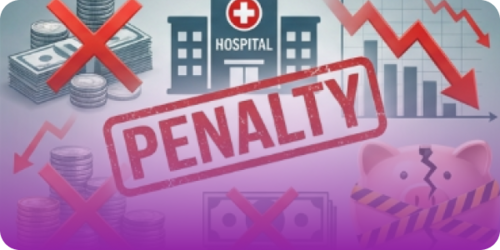
Problem #1: CMS Penalties Are Structural, Not Episodic
CMS penalties are
- Not exceptions
- Not temporary
- Not appeal-based
- Not tied to staffing levels
They are annual, cumulative, and automatic.
For a hospital with:
- $80–$120M Medicare inpatient revenue → $2.4M–$3.6M exposed every year
(CMS, MedPAC)

Problem #2: Readmissions Are Cost Centers, Not Revenue Events
Each readmission typically costs:
- $15,000–$18,000 per case
Most are:
- Partially reimbursed
- Resource intensive
- Clinically avoidable
Even a 10% reduction in avoidable readmissions yields $450,000–$900,000 per year saved.
(AHRQ HCUP, MedPAC)

Problem #3: Hospitals Lose Control the Moment the Patient Leaves
Post-discharge, hospitals face:
- Patients forgetting medications
- Misunderstanding instructions
- Missing labs and follow-ups
- Delayed complication recognition
Peer-reviewed evidence shows:
- ~60% of readmissions are driven by post-discharge non-adherence
- $100–$300B/year lost nationally due to non-compliance
(NEJM, NCBI)
This is not a clinical failure, it is an execution failure.

Problem #4: Staff Cannot Scale Follow-Up
Hospitals attempt to compensate through:
- Nurses
- Care coordinators
- Case managers
But:
- Staffing shortages are structural
- Follow-up is time-intensive
- Burnout increases turnover
Even 2–3 FTEs consumed by post-discharge chaos equals $200K–$300K annually.
(BLS, Health Affairs)

Problem #5: Static Discharge Instructions Do Not Work
Discharge summaries are
- Static
- Paper-based or portal-based
- Issued once
- Rarely revisited
Hospitals hand over responsibility but penalties remain.
Briea Is Built for One Purpose: To Execute Post-Discharge Care Over Time, At Scale
Briea does what hospital systems and staff cannot.

1. One-Year Dynamic Care Plans
Briea converts discharge instructions into:
- A one-year care plan
- Covering surgery recovery, chronic disease, and post-hospitalization care
- Continuously adjusted based on patient behavior and risk
Impact: Fewer late readmissions, fewer silent failures.

2. Proactive, Scheduled Patient Engagement
Briea does not wait. It:
- Initiates contact on specific dates and times
- Reminds, educates, checks, and follows up automatically
- Continues for weeks and months — not just 7 or 30 days
Impact: Adherence becomes systematic, not accidental.

3. Voice, Text, and WhatsApp — Fully Functional
- No app dependency
- Full functionality available on WhatsApp
- Proven reach among elderly and low-bandwidth populations
- Supported by voice, text, and email
(Pew Research, Statista)
Impact: Engagement without additional staff or training.
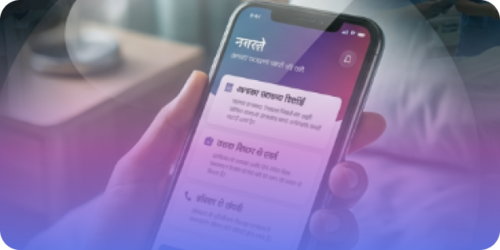
4. Multilingual by Design
- Removes language-driven readmission risk
- Improves equity-related outcomes tracked by CMS

5. Agentic AI + Generative AI
Briea's AI:
- Understands patient context
- Interprets behavior over time
- Adjusts follow-up intensity
- Escalates only when risk rises
This replaces manual chasing with automated intelligence.

The Financial Result (Conservative, Source-Backed)
| Value Area | Annual Impact |
|---|---|
| CMS Penalty Reduction | $120K–$360K |
| Avoided Readmission Cost | $450K–$900K |
| Staff Cost Offset | $180K–$300K |
| Length-of-Stay Optimization | $1.2M–$1.5M |
| Risk & Liability Reduction | ~$100K |
| Total Annual Impact | $2M–$4M+ |
(CMS, MedPAC, AHRQ, NEJM, AHA, Johns Hopkins Medicine)
Hospitals Are Already Paying for Post-Discharge Failure

The Only Decision Is Whether They Continue
Every year:
- CMS extracts revenue
- Readmissions inflate costs
- Staff absorbs preventable workload
- Reputation erodes quietly
None of this is invisible. None of this is new.
Briea Makes Post-Discharge Care Measurable, Controllable, and Scalable
- No new staff
- No patient dependency on apps
- No disruption to existing systems
Just execution — over time, automatically.
This Is Not a Technology Choice. It Is a Financial Governance Decision
Hospitals that control post-discharge execution:
- Protect Medicare revenue
- Reduce avoidable costs
- Stabilize operations


Call to Action
If your hospital is exposed to CMS penalties, inaction is already costing millions.
Hospitals that control post-discharge execution:
- Deploy Briea
- Execute care after discharge
- Protect revenue