
Why This Matters to Your Business
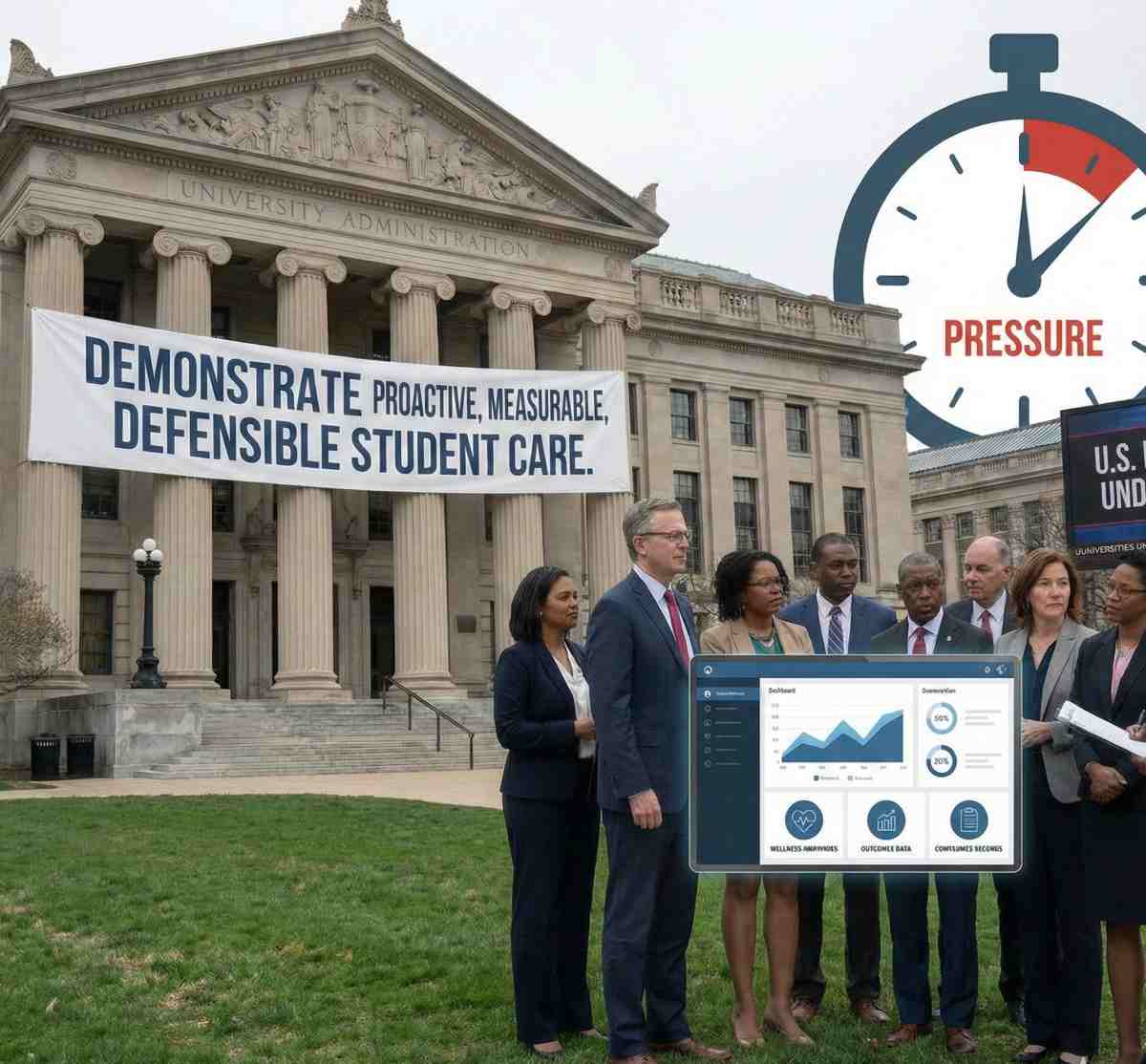
U.S. universities are facing unprecedented pressure to demonstrate proactive, measurable, and defensible student care
They are not seeking:
- Another standalone wellness app
- Another counseling vendor
- Another fragmented solution
They are seeking trusted partners who can help them address a new institutional requirement - one that sits at the intersection of governance, risk, retention, and reputation.
Briea enables you to own this emerging category.
Built for Partner-Led Distribution
- White-label or co-branded deployment
- API / module-based integration
- Revenue-share or reseller models
- Designed to extend existing campus platforms and services
THE MARKET PRESSURE: WHY UNIVERSITIES ARE ENTERING A NEW BUYING CYCLE
Student Wellbeing Has Become a Board-Level Risk Variable
Across the United States, student wellbeing is no longer treated as a student affairs issue. It has become an institutional risk factor with direct implications for:
- Retention and tuition revenue
- Legal and insurance exposure
- Accreditation outcomes
- Institutional reputation and trust
This shift is driven by four well-documented forces.


1. Population-Level Mental Health Demand
- 35–38% of U.S. college students accessed mental health services in the last 12 months (Healthy Minds Study – University of Michigan)
- More than 20% of students report that emotional distress has negatively impacted their academic performance (American College Health Association – National College Health Assessment)
- Rates of anxiety, depression, and sleep disorders among 18–24-year-olds have more than doubled since 2013 (CDC & NIH longitudinal surveillance data)
This is no longer a niche population. It is a systemic, population-wide condition.
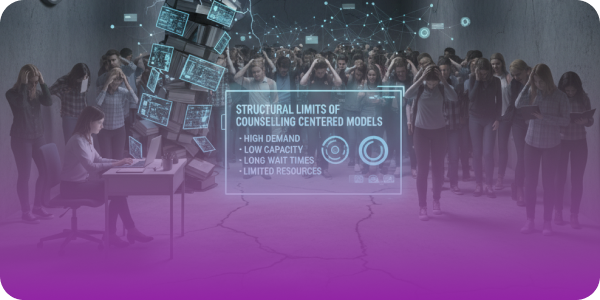
2. Structural Limits of Counselling Centered Models
Despite increased investment and staffing
- University counseling centers typically serve only 10–15% of the student population annually
- Median wait times for non-urgent care range from 7 to 21 days (Association for University and College Counseling Center Directors – AUCCCD Annual Survey)
These constraints are structural - not operational - and cannot be solved by hiring alone.

3. Retention and Financial Exposure
Independent economic studies estimate:
- $15,000–$25,000 per student per year in lost net revenue due to attrition (Educational Policy Institute – College Attrition Cost Framework)
For a mid-size university (10,000 students):
- 0.5% attrition = $750k–$1.25M annual loss
- 1.0% attrition = $1.5–$2.5M annual loss
Wellbeing-related attrition is often:
- Undocumented
- Misattributed
- Detected too late for intervention

4. Legal, Insurance, and Governance Pressure
- Higher-education insurers identify student mental-health incidents as a growing underwriting risk (Gallagher Higher Education Insurance Market Report)
Post-incident scrutiny increasingly focuses on:
- Whether proactive monitoring existed
- Whether engagement was continuous
- Whether escalation thresholds were defined
- Whether actions were documented
Intent is no longer sufficient. Evidence now defines defensibility.

The Institutional Gap
The Institutional Gap
Universities already have:
- Counseling services
- Policies and statements
- Crisis protocols
They lack:
- Daily proactive engagement at scale
- Lifestyle-based early warning signals
- Anonymized population insight
- Documented evidence of reasonable duty of care
This gap is institutional - not clinical. And it is creating a new, fundable buying category.
THE SOLUTION ARCHITECTURE: WHY BRIEA DEFINES THE CATEGORY

Introducing a New Institutional Category: Student Care Assurance
Student Care Assurance is not therapy delivery. It is not counseling access. It is not a wellness app
It is institutional infrastructure that enables universities to:
- Engage students proactively at population scale
- Address mental health through lifestyle and behavior
- Escalate proportionately and responsibly
- Preserve privacy and minimize liability
- Produce governance-ready evidence of care
Briea was built from the ground up for this purpose.
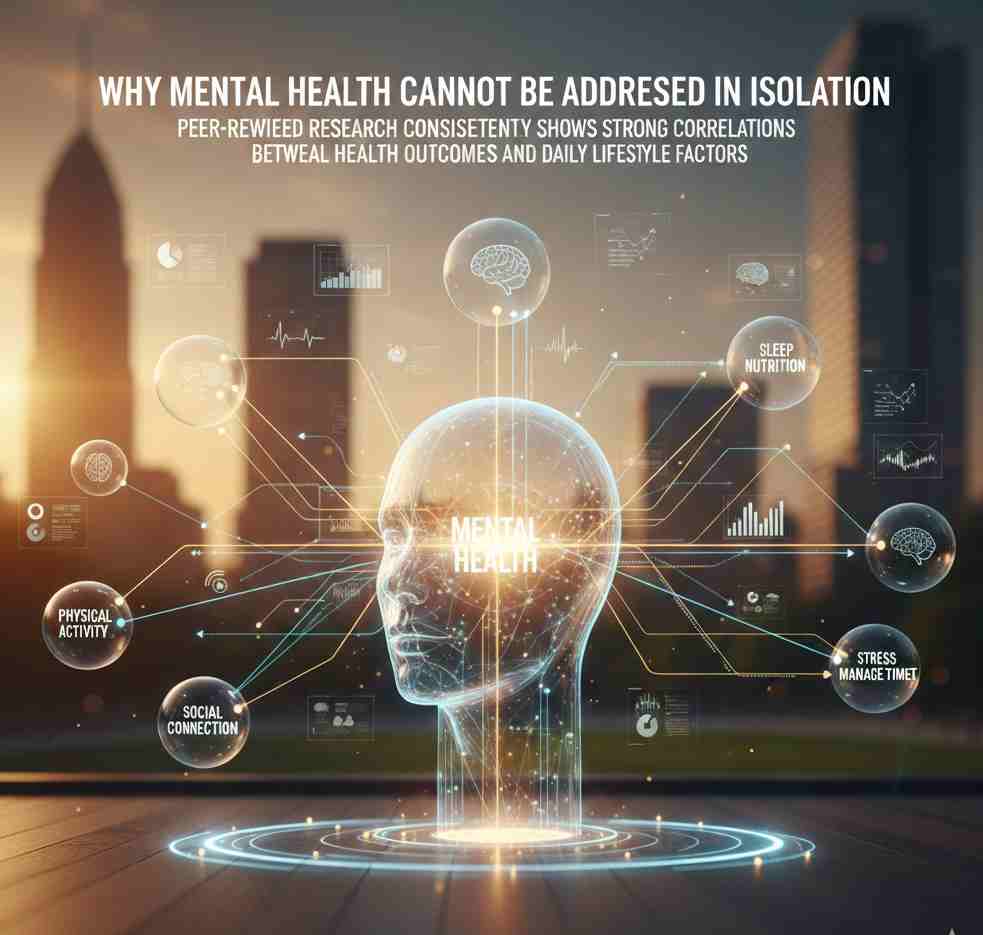
Why Mental Health Cannot Be Addressed in Isolation
Peer-reviewed research consistently shows strong correlations between mental health outcomes and daily lifestyle factors:
- Poor sleep is associated with significantly higher anxiety and depression (CDC – Youth Risk Behavior Surveillance System)
- Physical inactivity correlates with lower academic performance and emotional distress (CDC & NIH)
- Alcohol, smoking, vaping, and tobacco use increase anxiety, depressive symptoms, and cognitive impairment (NIH – National Institute on Drug Abuse)
- Poor diet and elevated BMI are associated with mood dysregulation and reduced executive function (Harvard T.H. Chan School of Public Health)
Most campus solutions ignore these drivers. Briea is designed around them.
Briea’s Holistic Student Care Architecture

1. Continuous, DIY-First Student Engagement
Briea engages students through proactive
- Voice, WhatsApp, and App-based conversations
- Daily wellness nudges embedded into routine student behavior
Coverage includes:
- Nutrition and diet
- Fitness and physical activity
- Sleep hygiene
- BMI and metabolic risk
- Alcohol, smoking, vaping, and tobacco moderation
- Lifestyle disease and chronic risk prevention
- Stress, anxiety, mood, and emotional wellbeing
The DIY-first model:
- Reduces stigma
- Preserves human resources
- Enables population-scale adoption

2. Evidence-Based Mental Wellbeing Monitoring
Briea integrates globally validated instruments widely accepted in U.S. academic and clinical contexts:
- PSS-10 – Perceived Stress
- GAD-7 – Anxiety
- PHQ-9 – Depression
- PSQI – Sleep Quality
- WHO-5 – Emotional Wellbeing
Results are:
- Interpreted instantly by AI
- Translated into guided actions
- Tracked longitudinally to identify deterioration or improvement

3. Escalation Matrix Built for Institutional Governance
Briea uses a proportional, three-level escalation model:
- 1. DIY AI Care (Default) – majority of students
- 2. Assisted Reinforcement – repeated risk or disengagement
- 3. Controlled Escalation – only when thresholds are crossed
Identity is masked by default and revealed only when necessary, and only to authorized roles.

4. Privacy-First Institutional Oversight
At the leadership level:
- Dashboards are fully anonymized
- Trends shown by cohort, residence, and progra
- Role-based access with audit trails
- Time-stamped outreach and escalation records
This aligns with FERPA principles and insurer expectations.
Visibility without surveillance. Evidence without overexposure.
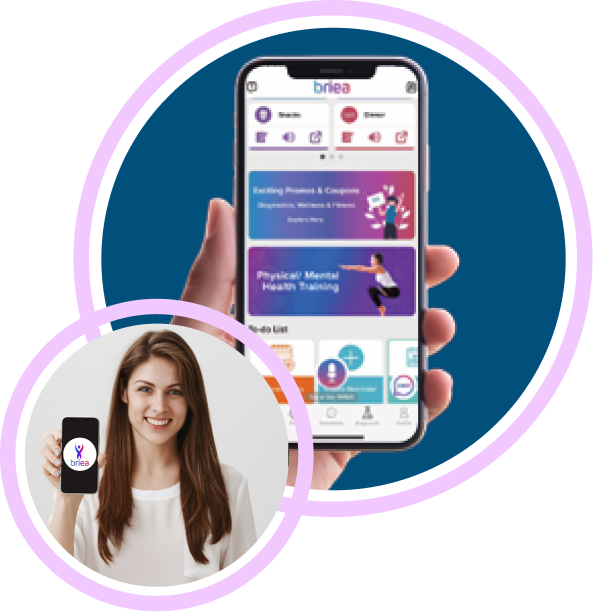
Why This Is Not Feasible as a “Feature”
Replicating Briea requires:
- Conversational voice AI at scale
- Behavioral science-driven habit formation
- Holistic wellness + disease + mental health logic
- Longitudinal care orchestration
- Privacy-by-design escalation architecture
- Legal- and board-ready reporting
This is multi-year R&D, not incremental product work. Partnering is the rational choice.
PARTNER ECONOMICS, SCALE & CALL TO ACTION

The Market at Scale
- ~4,000 degree-granting institutions in the U.S. (National Center for Education Statistics – NCES)
- ~18 million enrolled college students annually (NCES)
Student Care Assurance applies across:
- Public and private universities
- Community colleges
- Residential and commuter campuses
This is a national, repeatable market.

Why Universities Will Pay and Renew
- Attrition loss per student: $15k–$25k annually (Educational Policy Institute)
- Preventing 0.5% attrition on a 10,000-student campus preserves $750k–$1.25M annually
Student Care Assurance budgets typically represent a fraction of one percent of tuition revenue.
This makes pricing defensible, renewals sticky, and expansion natural.

Why This Is a Partner-Friendly Revenue Stream
- Board-level urgency
- CFO-justified ROI
- GC-approved governance language
- Multi-year contracts
- Low churn
- Strong cross-sell and upsell potential
This is institutional infrastructure, not transactional SaaS.

Where Partners Monetize Immediately
Briea integrates naturally with:
- ERP / SIS / LMS platforms
- Student success and retention tools
- Campus health, insurance, and wellness services
- Managed campus services
- Higher-ed consulting and advisory practices
Partners gain differentiation without product rebuild.

Partners gain differentiation without product rebuild.
Partnership Models
- White label
- Co-branded
- API / module integration
- Reseller or revenue share
- Managed services overlay
Commercial flexibility is intentional.
Call to Action
Student Care Assurance will become standard institutional infrastructure.
The question is
Who will own it in the U.S. market?
Next Steps
- Identify 1 - 2 shared university clients
- Launch a 90-day partner-led pilot
- Produce a joint case study
- Scale across your higher-ed portfolio
Briea Student Care Assurance Program
Institutional assurance. Partner-led growth.
Let’s Talk
Contact Information
Briea (Health Tech Initiative of Anant Softtech Pvt. Ltd.)
Email: partnerships@thebriea.com
Website: www.thebriea.com
Phone: +1-(415)-236-1558